Review: In Other Waters
Summary
Despite interesting concepts and a clever interface, In Other Waters' simplicity holds it back.
Developer – Jump Over The Age
Publisher – Fellow Traveler
Platform – Nintendo Switch
Well, I’m back in the saddle of game reviewing. It took me a while, but I’ve finally got my thoughts composed on something fresh again. On that point, today I’m looking at an indie adventure from the deep, on a distant planet full of life unknown to man – In Other Waters. With that said, let’s dive (heh) into this review!
I’ll try to be concise here, so let’s talk plot. Of course, I won’t be going into any spoiler territory, but here are the basics:
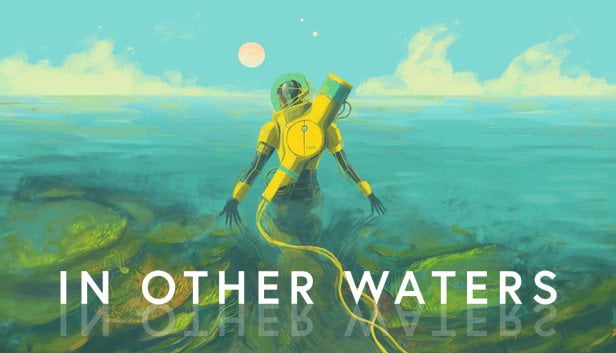
In the open ocean of a distant planet, xenobiologist Dr. Minae Nomura has gone unexpectedly missing during her research. Her colleague, Dr. Ellery Vas, takes it upon herself to search for the missing doctor, but finds something strange along the way – you, an aquatic exploration droid belonging to the Baikal Corporation. With your help to explore the chilling extraterrestrial waters, Ellery is set on finding Minae and documenting whatever life the two of you may come across throughout your journey.
I like this plot set up a lot! Very reminiscent of OPUS: The Day We Found Earth to me, a story of a robot and a scientist in the vast unknown, searching for new things, but their ultimate goal being someone or something very familiar to them. Tonally, however, this story varies greatly. Whereas OPUS is a story with a lighter heart and comedic moments, In Other Waters is stiff and unwavering. Which, to be clear, is not a knock on the game. I think the plot taking itself much more seriously fits better for this game, as the situation and aesthetic wouldn’t really mesh well with joke-filled dialogue.
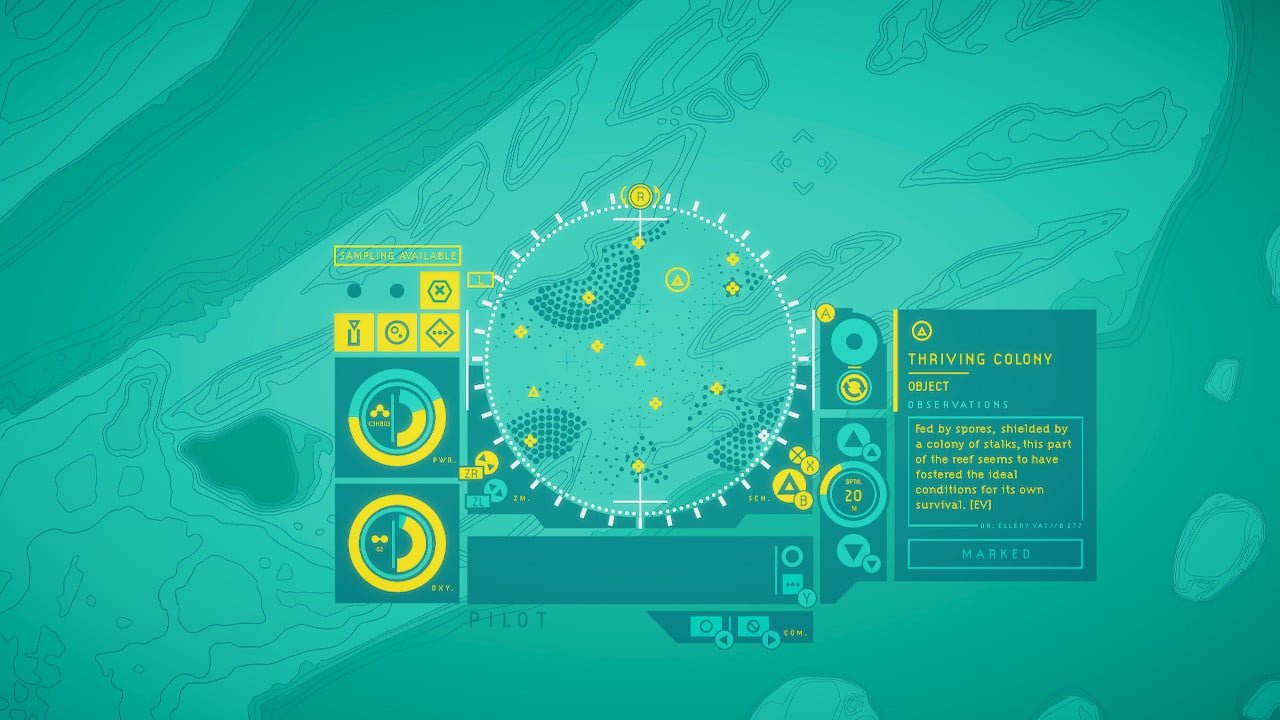
It would not really mesh well with the aesthetic either. In Other Waters goes for a very minimalist approach, graphically speaking. Most of the game’s color scheme is blue, blue and more blue, as well as black, yellow, and white. But I actually sort of like this despite how basic it is. It compliments the simple UI (I’ll get to that in a minute) and, weirdly enough, reminds me of old Magnavox Odyssey games, which used an external layout to convey events on an otherwise extremely simple and abstract screen. Coupled with an ambient, calm soundtrack, it’s a nice atmosphere to unwind with in bed at the end of the day.
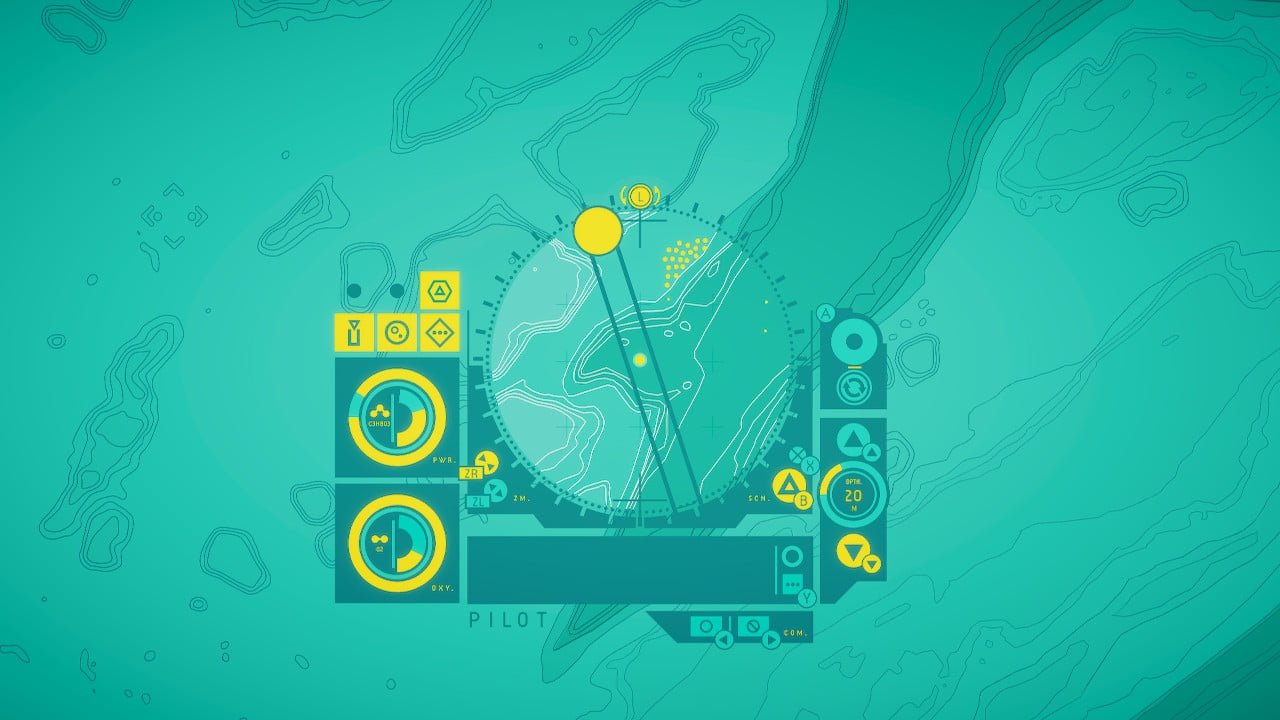
All that said, how exactly do you play this game? In Other Waters is played using an interface made to represent a radar, with various attachments on the sides. I think this has got to be one of the most clever and commendable UIs I’ve ever seen. It perfectly conveys to the player what each of the various parts of the UI do with little to no text explanation, because it looks exactly like what one would imagine if they were actually controlling the robot in the game. You move from place to place, scan the area to search for marine life and other points of interest, collect samples, and find waypoints around the ocean where you can conduct research and rest up for the next dive. Unfortunately, this is where the problems for me really began.
Now, there are two games that I feel strike very similar chords to In Other Waters in very different ways for me. The first is the aforementioned OPUS, a game of the same genre that, outside of its story, happens to hit quite a few of the same notes in multiple ways. I think anyone familiar with both games probably saw this point of comparison coming. The other game, which will likely take you by surprise, is The Legend of Zelda: Majora’s Mask. But these games are so different from each other; they have different stories, worlds, characters, themes, graphics, music, and gameplay. Nothing about these two games from an objective point of view is similar. Which is exactly why the comparison here is entirely subjective.
Now, for those of you who know me, you know how I feel about Majora’s Mask. And now that I’ve said this, it’s pretty much a dead giveaway as to my overall thoughts on and experience with In Other Waters. However, considering I am not known by everybody on Earth, I feel obligated to say that, while I love the world and story of Majora’s Mask, I cannot stand playing it for long. I got to a point where I just gave up because I wasn’t enjoying myself nearly as much as I was at first. You know exactly where I’m going with this.
Yeah, sadly, I don’t like playing this game. To the point where, much like Majora’s Mask, I gave up. It’s rare for me to actually want to abandon a game for good, no matter how much I may dislike playing it. But I cannot recall many times I have felt like I wanted a game to just get to its point and be done with it like I did with this. To make another comparison to OPUS, I completed that game in about 2 hours, and that felt good. It accepts and embraces its simplicity and keeps things concise. I got roughly that same time into In Other Waters, and yet when I looked at the full map, I had barely explored any of it. It felt discouraging because I sort of like the gameplay, but I don’t like games carrying themselves out for too long, and that’s what I felt here. And even then, I have my qualms with the gameplay.
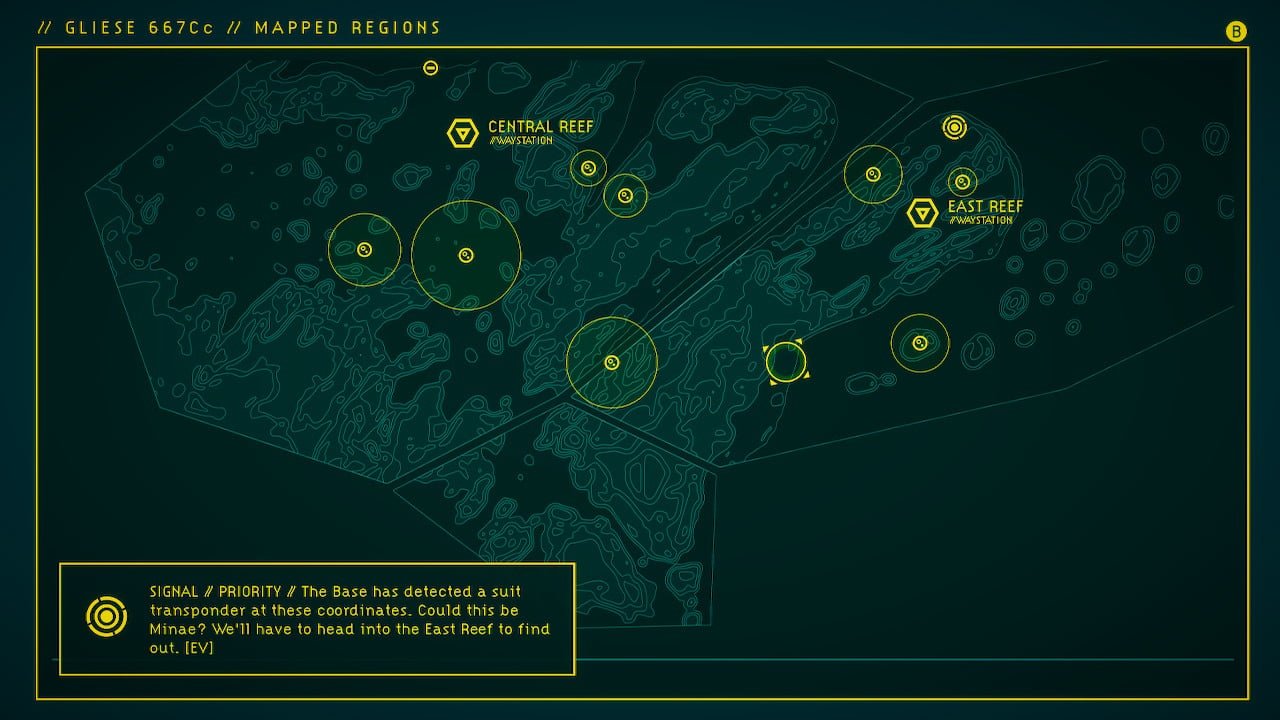
Movement in the game is slow, which, while making sense contextually, is just too sluggish for my liking. I was also constantly walled off by barriers of marine life, which react to a specific sample type which you carry in your inventory. The problem here is that your inventory is 9 slots large and these samples get used up fast, can’t be gathered at every spot, and have to share room with other samples in your inventory. The barriers even regenerate either after a certain amount of time or from a certain distance away, and if you don’t have any shrillsac samples to get you through them again, you might just have to request a ride back to the last waystation you were at to try again, which is even more discouraging and even frustrating. It’s sad, because I don’t find this to be a bad game. I think other aspects make up for the gameplay’s shortcomings to make an, at least, okay experience. But the game part backing it up is what my issue is here, and gameplay is important to me above all else.
Overall, it kinda hurts that I just couldn’t bring myself to get through it, because I like the ideas it has a lot. I’m not going call it bad just because I didn’t like how it plays or how it isn’t as concise a game that it’s not trying to be. If you’re a fan of adventure games like these, and are looking for something that’ll last, you might get more enjoyment than I did. I just don’t think what it was going for is what I wanted out of it.