


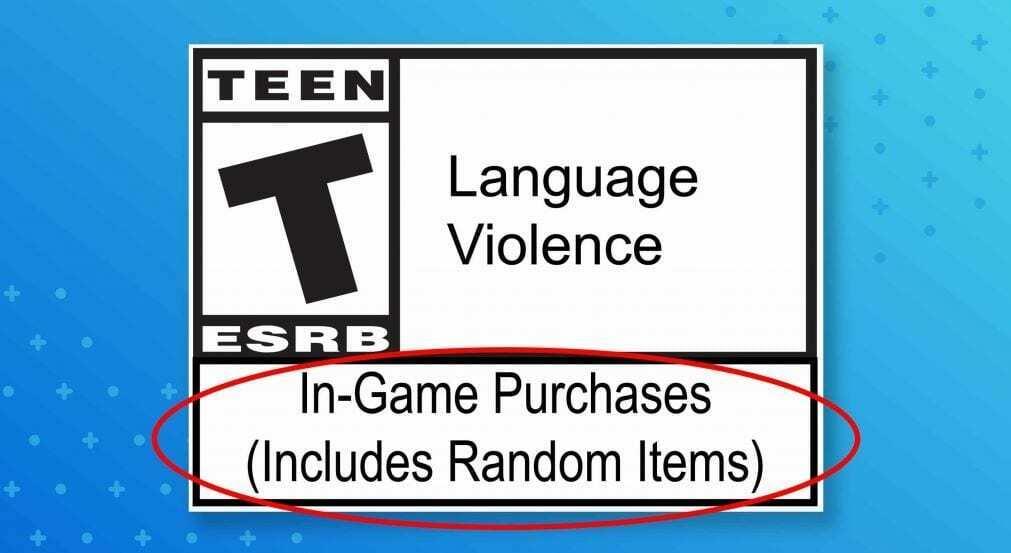
Dating more than a year ago, the Entertainment Software Rating Board (ESRB) for North America disclosed due to tailing controversy that surrounded the premise of loot boxes in video games, the organization would label titles of the respected software containing the opportunity to purchase in-game packages for randomized items in return. While the conversation of this implementation for virtually anyone given the ability to act upon a potential transaction could be considered gambling, the ratings group was deemed responsible to list it on the ratings prior to being released.
Now in a recent blog post made by ESRB, the organization shows a close examination of the new listing for games offering loot boxes and what this means for future rated content. As stated previously, the new labeling applies to any piece of software that includes contents of the likes that resemble loot boxes interactivity to purchase for the chances of earning in-game items alongside the more direct transaction of buying virtual currency.
This new Interactive Element, In-Game Purchases (Includes Random Items), will be assigned to any game that contains in-game offers to purchase digital goods or premiums with real world currency (or with virtual coins or other forms of in-game currency that can be purchased with real world currency) for which the player doesn’t know prior to purchase the specific digital goods or premiums they will be receiving (e.g., loot boxes, item packs, mystery awards).
While the action branded to receive the rating might seem superfluous for games that include options to pay for additional content to the same merit as loot boxes, the ESRB explains that the decision was swayed by evidential research that supports lucrative purchase made by younger demographics. Even more, the organization goes to elaborate on why the label does not precisely reads ‘contain loot boxes’. “‘Loot box’ is a term that doesn’t encompass all types of randomized in-game purchase mechanics.
“We want to ensure that the new label covers all transactions with randomized elements. In-Game Purchases (Includes Random Items) accounts for loot boxes and all similar mechanics that offer random items in exchange for real-world currency or in-game currency that can be purchased with real money.” This precautionary listing goes to assist individuals who might not understand the concept of loot boxes on a surface level and better grasp the idea ahead of unsupervised & unintended transactions.
From the research gathered, it is insisted that children are more prone to making purchases with real-time currency in return for a potential payout of greater valued, in-game items and that parents or guardians watching over are less familiar with the meaning of loot boxes. Adding that roughly one third of parents understand and know what loot boxes are exactly.
Furthermore, ESRB also projected to inform more players on the topic for users to think before deciding to make the purchase rather than learning after the transaction was made.
Source: ESRB

- News
 Is A Sonic CD Port Actually In Development?
36 minutes ago
- News
 Jet Set Radio, Craxy Taxi New Leaks Points To Nearing Announcements
5 hours ago
- News
 XBOX Game Pass June 2026 Welcomes Undisputed, Persona 5 Royal, And More
6 hours ago
- News
 Grounded, Nickelodeon All Star Brawl 2, Warhammer 40,000: Darktide Go Live This Week For PlayStation Plus June 2026 Free Games
6 hours ago
